The situation
Illustrative example. Not a real job or customer.
A small cafe in an older strip center leases its space and has a single hood over a flat-top and two fryers. During the lunch rush, grease buildup on the flat-top ignites. The hood suppression system discharges and puts out the fire. Staff evacuate customers and call 911. The kitchen is coated in suppression agent, the dining room smells of burned grease, and soot has collected on the ceiling tiles near the pass-through.
- After the fire department releases the space, the owner photographs the kitchen, the dining room and the hood interior.
- The owner calls the insurer about business interruption and spoiled food, and calls the landlord about the hood and duct.
- The suppression system contractor is scheduled to service and recharge the system.
- A hood and duct cleaning company cleans the hood, filters, ductwork and rooftop fan, and provides a written report.
- A restoration contractor cleans the kitchen and dining room, including ceiling tiles above the pass-through, which are replaced.
- The owner asks the health department and fire inspector what they need to see before reopening.
With all records in hand, the cafe passes its inspections and reopens. Business interruption coverage applies after the policy's waiting period, and the food loss is supported by an itemized list the manager made on the day of the fire.
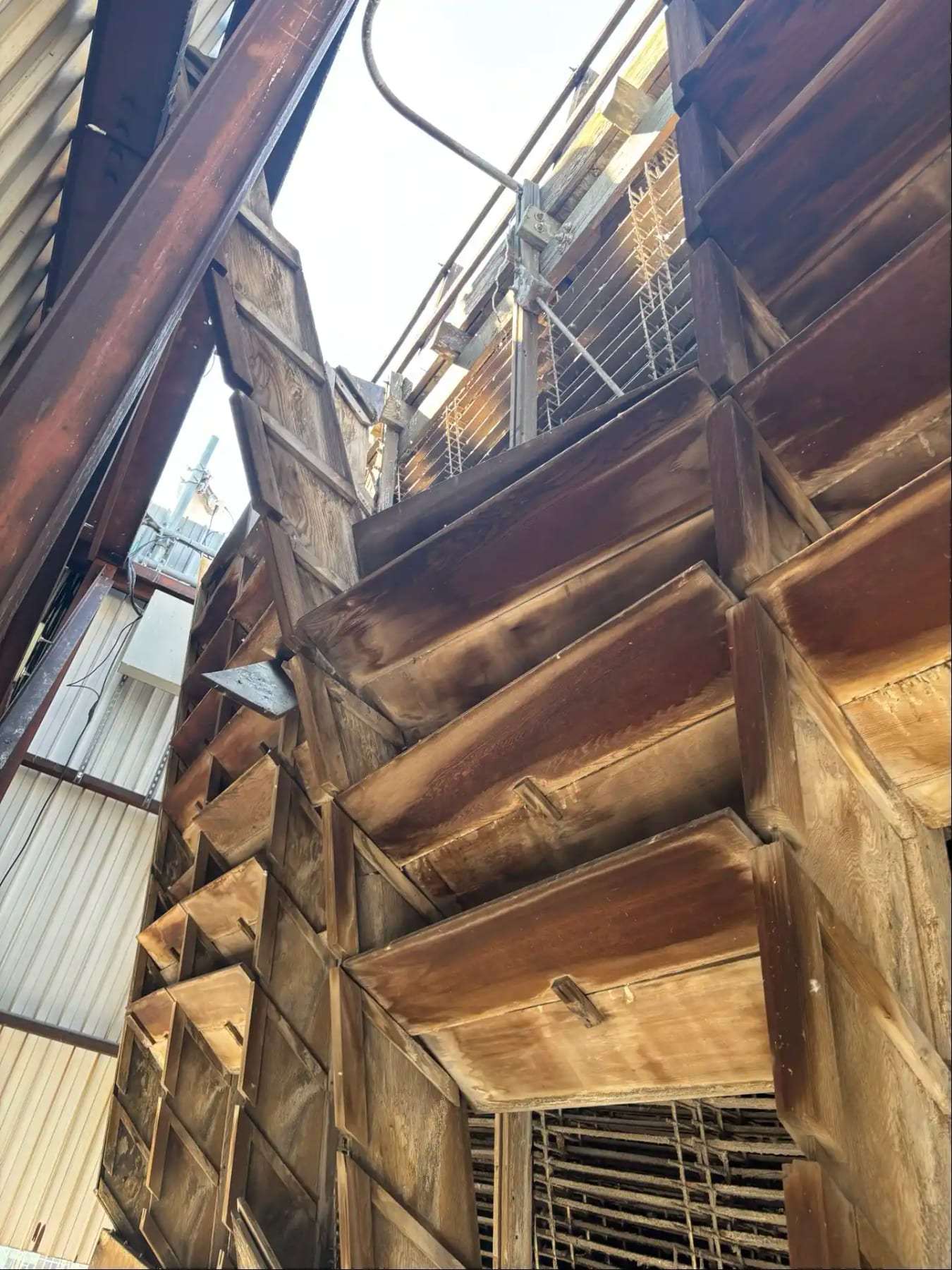
Fire-damaged roof framing seen from below with daylight through the roof. Illustrative only: this photo is not from a job tied to this site or a specific address.
The reopening sequence that worked
Release and records
Photos and a food discard log were started on the first day, before anything was thrown out.
System service before cleaning finished
Booking the suppression contractor early avoided a wait at the end.
Duct first, kitchen second
Cleaning the duct and fan before the kitchen kept falling residue from soiling finished surfaces.
Dining room last
Front-of-house cleaning was finished after the kitchen, so dust from the back wasn't tracked forward.
Paper trail for inspectors
Service tags, duct cleaning report and cleaning invoices were kept in one folder for the inspections.
What went right and what nearly didn't
| Went right | Nearly went wrong |
|---|---|
| Staff used the manual pull station and got customers out quickly | A cook wanted to reopen the fryers before the system was recharged |
| Food discard log was started the same day | Ceiling tiles above the pass-through were almost missed |
| The landlord confirmed early who was responsible for the duct | The ice machine needed a full clean after sitting in smoke |
| All service reports were saved for inspectors | Business interruption waiting period wasn't understood at first |
General information for Colorado Springs, not a quote or professional advice. In an emergency, call 911.