Why timing here is different
- Dry, windy months
- Late fall through spring often bring low humidity and strong downslope winds
- Summer
- Heat and lightning can start fires in the foothills and forests
- Monsoon season
- Afternoon storms bring some moisture but also lightning and flash flood risk on burn scars
- Snow
- Spring snow can be followed quickly by dry, windy days
The calendar
- January and February
- Check that your phone is registered for emergency alerts. Review your insurance limits and ask about extended replacement cost.
- March
- Record or update your home inventory video. Pack or refresh go bags for each person, including medications and chargers.
- April
- Clean gutters and roof valleys of needles. Rake debris from under decks and along the foundation.
- May
- Thin and limb trees near the house, and move firewood well away from the walls. Check vent screens for holes.
- June
- Mow and water the area closest to the house. Practice your evacuation route, including a second way out.
- July and August
- Keep gutters clear after storms. Watch for red flag days and avoid outdoor activities that spark.
- September
- Clean the evaporative cooler and replace its pads before closing it for the season.
- October and November
- Clean gutters after leaf drop. Have the chimney or wood stove inspected before the heating season.
- December
- Store stove ash in a metal can outdoors. Review the year's notes and plan next spring's larger projects.
One-time projects worth scheduling
- Replace plastic or large-opening vents with ember-resistant designs
- Install metal flashing or a gravel strip where the deck and siding meet the ground
- Swap the last section of a wood fence at the house for a noncombustible gate
- Request a wildfire mitigation assessment if your fire department or district offers one
- Mark your address clearly at the street for fire engines
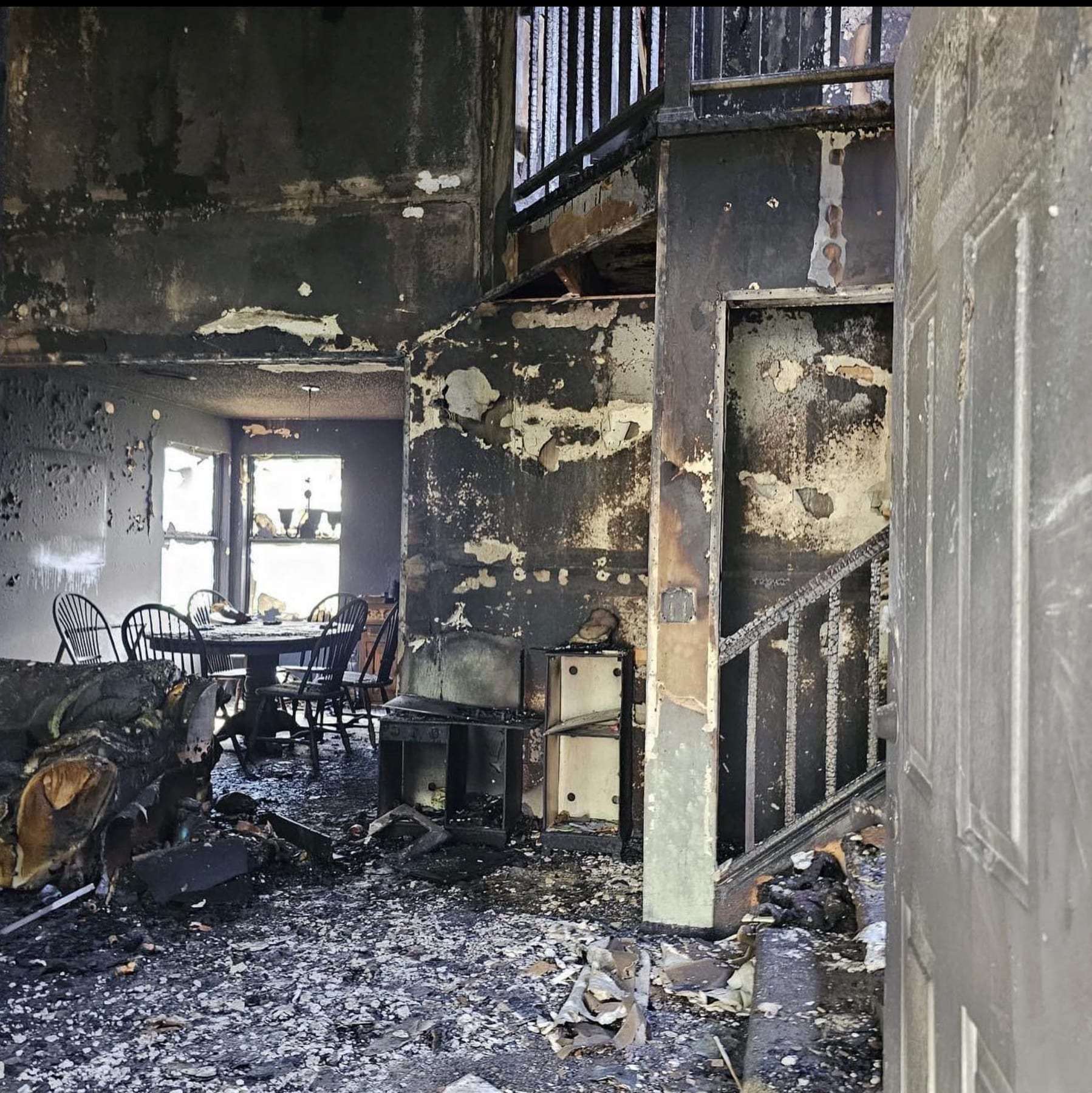
Home interior with charred walls and furniture after a fire. A general example of this kind of work, not a photo of a particular home, business or job.
Common questions
- Is this calendar only for homes right against the foothills?
- No. Homes on the plains east of the city face grass fire risk, and neighborhoods in the middle of town still get embers and smoke. The timing suits anywhere in the area; the depth of each task depends on how much vegetation surrounds your house.
- What is the single most useful task on the list?
- For many houses it is clearing needles and debris from gutters, roof valleys and the space under the deck, because those are where embers most often take hold.
General information for Colorado Springs, not a quote or professional advice. In an emergency, call 911.